Activity comparison
Microscopes for guided observation: choose the view, not the biggest number
Our Pick: National Geographic Dual LED for two observation formats
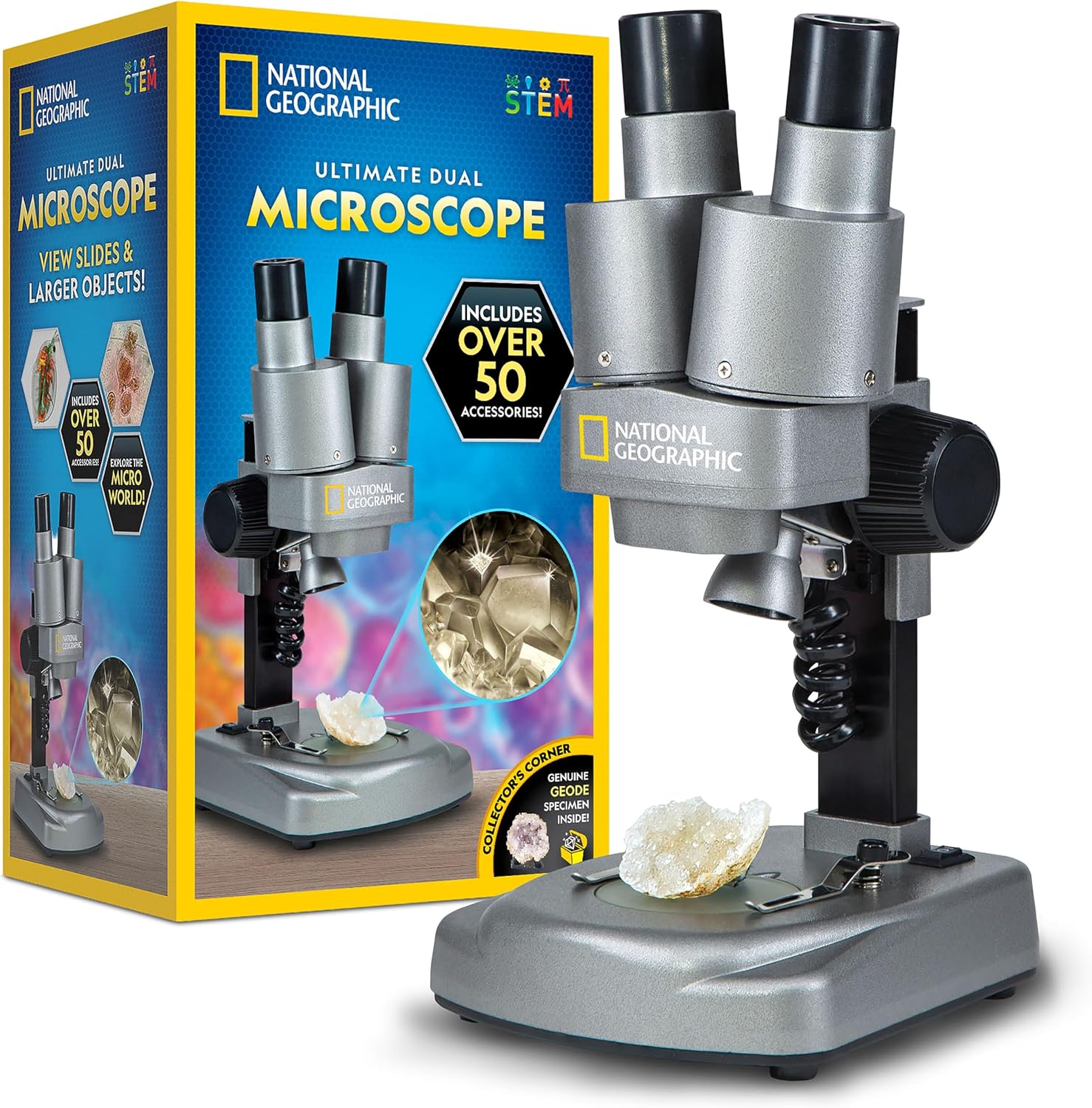
Our pick is the National Geographic Dual LED microscope for an adult-guided activity that alternates between prepared slides and the surface of a larger object. The exact listing targets ages 8–12; this is not a claim of independent use or suitability for younger children. A complete exact warning panel and the lighting power-supply requirement were not established in the sources captured. Check the actual box and matching instructions for slide handling, supervision and the required supply before choosing it.
The preference comes from the documented viewing format. The captured listing and matching Ultimate Dual package describe optical lenses providing 20x and 50x magnification, with lower LED illumination for slides and upper illumination for larger objects. The original image shows the twin-eyepiece microscope with a geode on its stage. That makes this our source-based starting choice for comparing different kinds of subjects, not for chasing a headline magnification.
We have not personally tested its optics, measured its resolving power, checked a particular child’s comfort at the eyepieces or verified the current seller’s inventory. The lens labels describe magnification; they do not prove how much fine detail a specimen will reveal. Illumination, preparation and focus still need attention in the actual activity.
Dual LED: check the particular kit
The captured listing identifies more than 50 accessories, including ten prepared slides, blank slides and covers, tweezers, a dropper and a mini geode. Those contents help explain its intended observation format, but they are not a live-offer guarantee. Do not assume that every package carrying National Geographic’s name is the same kit.
The maker’s matching Ultimate Dual page also describes a brine-shrimp activity that the exact captured listing did not establish as included. We are not promising those materials in this box or giving an experiment procedure from an unmatched manual. Confirm the package inventory and instructions for any specific activity before using it as the reason to buy.
The complete warning panel and power requirement remain checks for the actual product. Battery inclusion, a mains adapter or a particular number of batteries should not be inferred from the fact that the microscope has LED lights. An adult should also review the actual supplied slide and specimen instructions; this comparison is not a slide-preparation manual.
National Geographic Science Lab: the optical slide-kit alternative
The Science Lab microscope is the alternative for someone drawn to a single-eyepiece observation kit with prepared plant slides and other supplied samples. The captured package says 35 pieces and up to 400x. The listing describes three magnification levels, large focus knobs, an adjustable specimen platform and lights above and below.
Its captured contents include six prepared plant slides, six blank slides, six rocks and minerals, a pipette, a specimen dish and tweezers. The original image shows that blue-and-white microscope, matching the Science Lab box and guide. We are not importing an accessory inventory from the silver Ultimate Dual kit.
The nominal 400x label is not a finding that this option resolves more detail or is a better first microscope than the lower-numbered Dual LED. We have not verified the exact eyepiece/objective breakdown or measured image quality at any setting. Start with the actual guide and the specimen it specifies rather than expecting the highest printed setting to be useful for every object.
There is a source conflict worth keeping explicit. A short blurb on the maker’s Science Lab page describes a rechargeable digital handheld microscope, while its longer description and the captured product show the optical Science Lab. We reject that unrelated blurb for this comparison. It does not establish a screen, wireless operation, a rechargeable battery or a six-hour runtime for this exact kit.
The full age and warning panel, lighting supply and battery inclusion also remain unverified for this captured version. That makes it a conditional format alternative, not a recommendation for a particular younger age or a claim that it is ready to use without additional supplies.
Plugable USB microscope: shared viewing on a compatible host
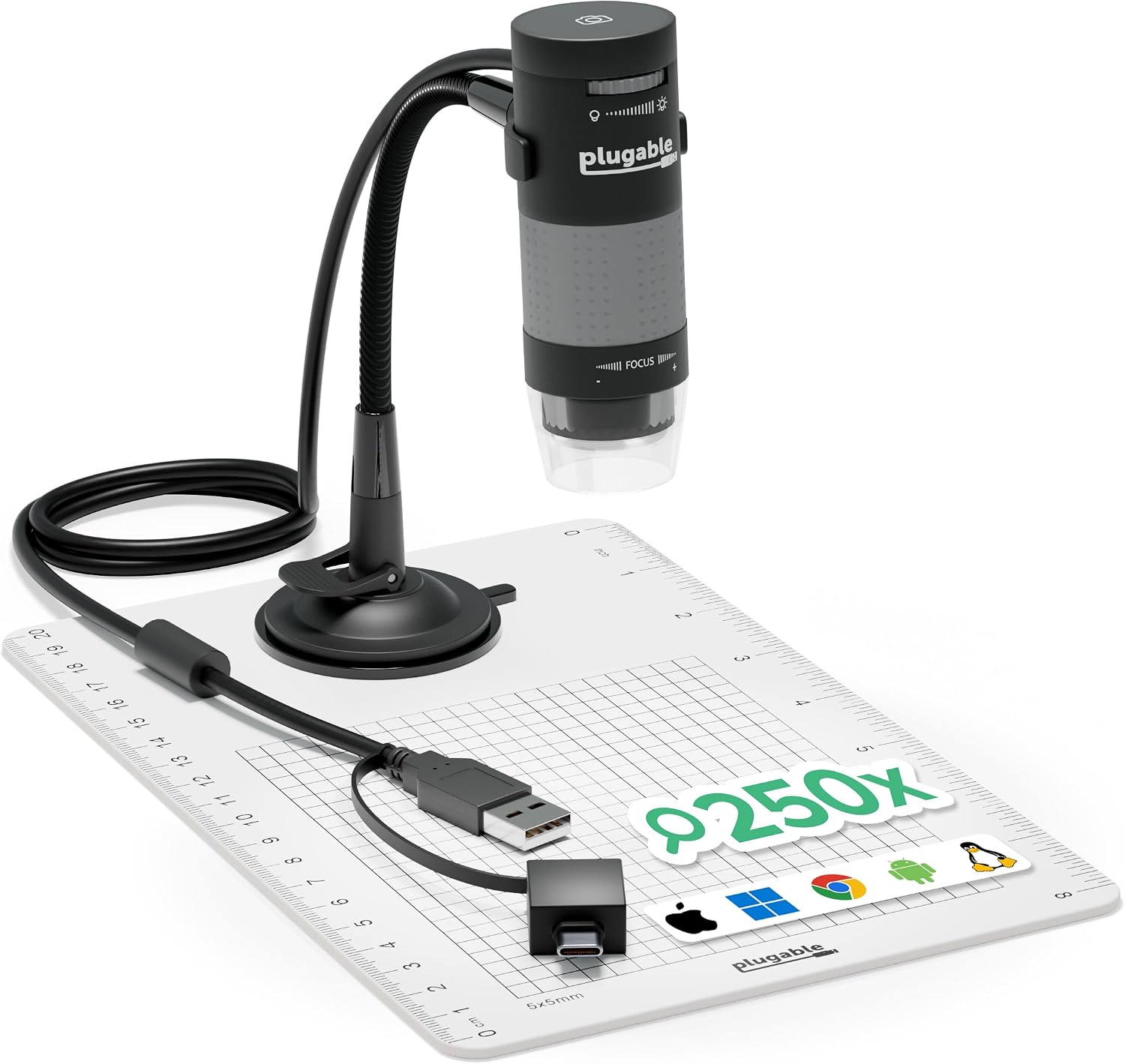
The Plugable USB2-MICRO-250X is the alternative for an adult-led activity where seeing the image on a computer screen matters more than looking through eyepieces. Its original image and captured listing show a USB camera head, flexible stand, observation pad and connector adapter. It is not a standalone screen microscope, and a USB-C socket alone does not prove that a particular phone or tablet will work.
Confirm the host operating system, camera application, port and camera permissions first. The captured listing specifies ChromeOS 108 or newer for that platform. The manufacturer describes standard webcam-style operation, but we are not turning broad compatibility wording into an assurance that every device or app is supported. No exact child-age label or complete warning panel was established; treat this as a conditional adult-led tool choice and follow its actual handling instructions.
Plugable describes approximately 60x to 250x magnification depending on working distance and focus, not a conventional zoom control. That figure should not be compared directly with the optical eyepiece labels as if all three products passed the same resolution test. Enlarging the displayed image is not proof of newly resolved detail.
The maker also distinguishes image modes: it lists 1600-by-1200 still capture and a 640-by-480 video mode. A 2MP still-image description is not a promise of 2MP video or high-definition detail in every application. We have not measured the sensor output, optical resolution, capture performance or the stand’s stability.
Plan the observation first
Decide whether the first subject is a prepared slide, a larger object’s surface or a shared on-screen view. That choice is more useful than ranking the largest printed number. Then check illumination, the specimen support, the actual supplied guide and whatever power or host equipment the exact model requires.
An adult can help position the specimen, adjust the setup using its instructions and invite the child to describe what changed. Do not turn a box illustration into a promise that every pictured structure will be visible in every sample. Keep unknown specimen, preparation and warning details unresolved rather than borrowing them from another microscope.
Evidence and buying limits
These are source-based editorial choices, not hands-on tests or verified live offers. Prices, grades and purchase links remain unpublished. Customer-answer material does not prove optical performance, safe ages or exact supplies. The power, warning-panel, inventory and resolution qualifications stay in place even where the documented observation format earns our pick.